
The Seerah of the Prophet ﷺ Is Not Merely a Matter of Devotion but a Guide to Practical Life
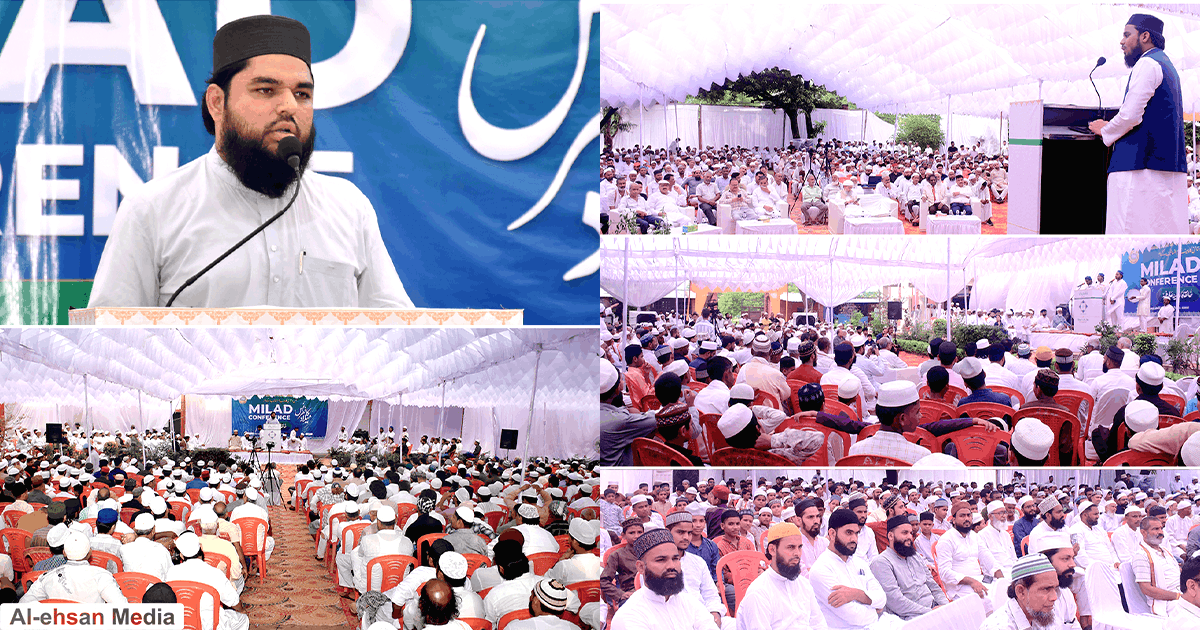
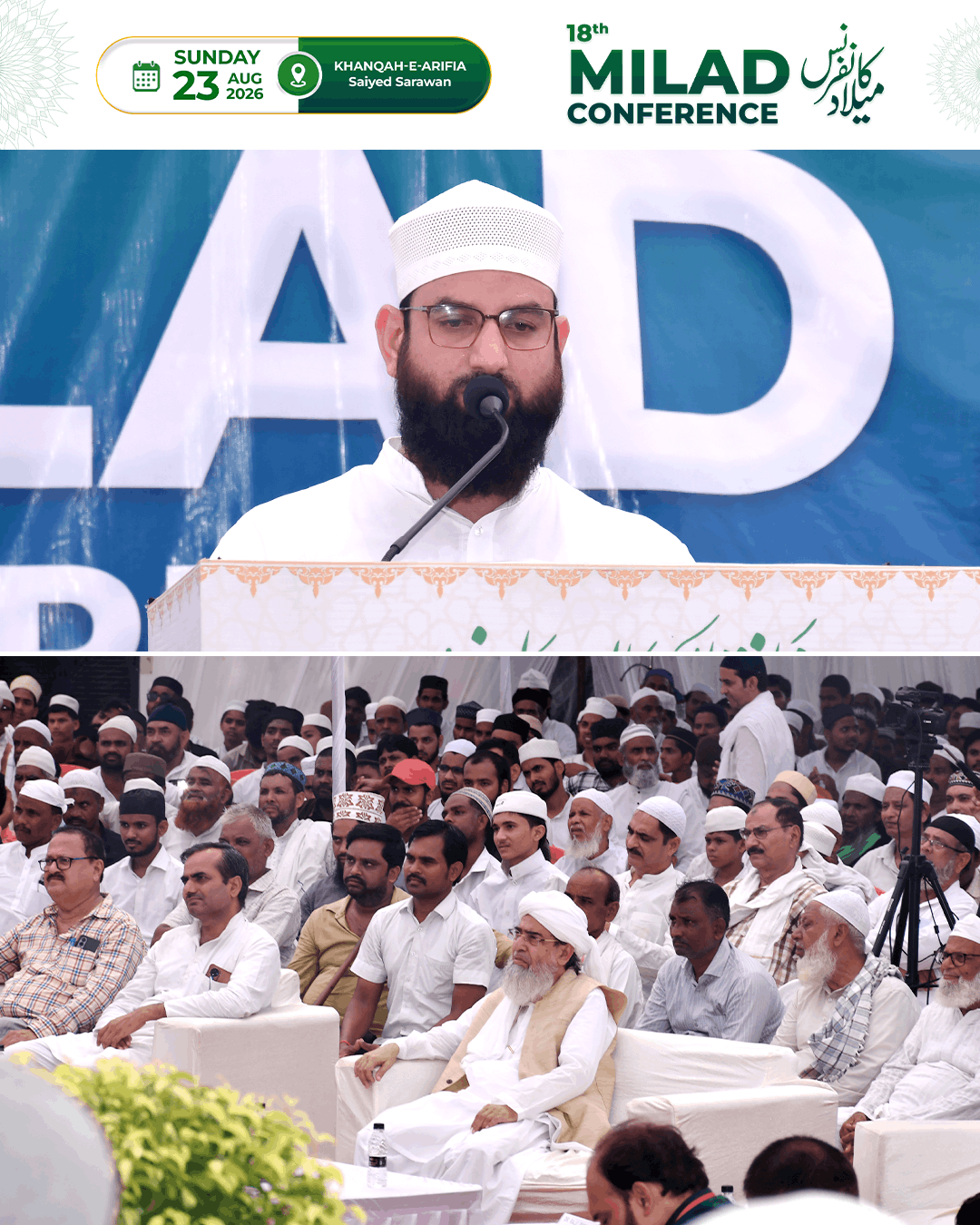
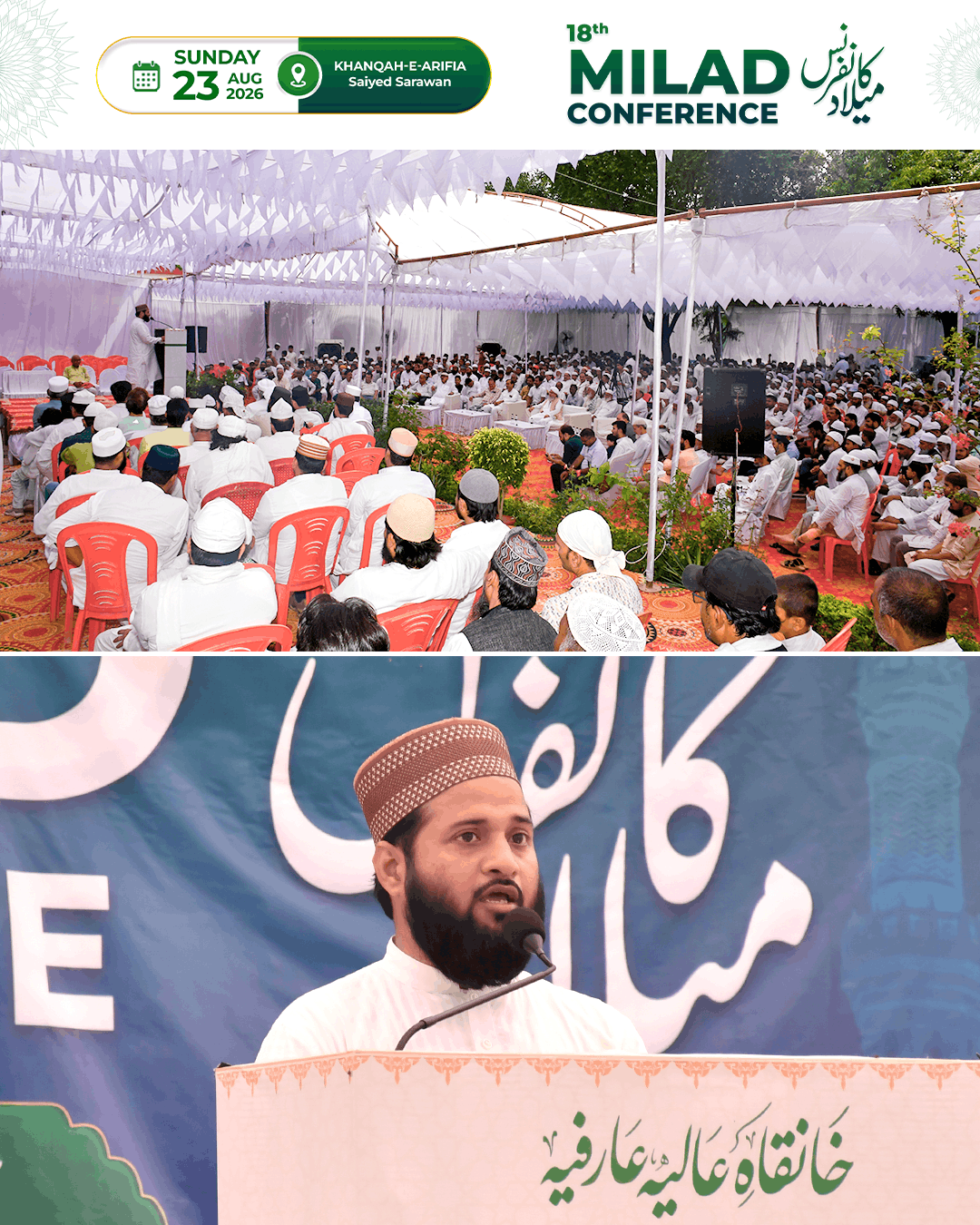
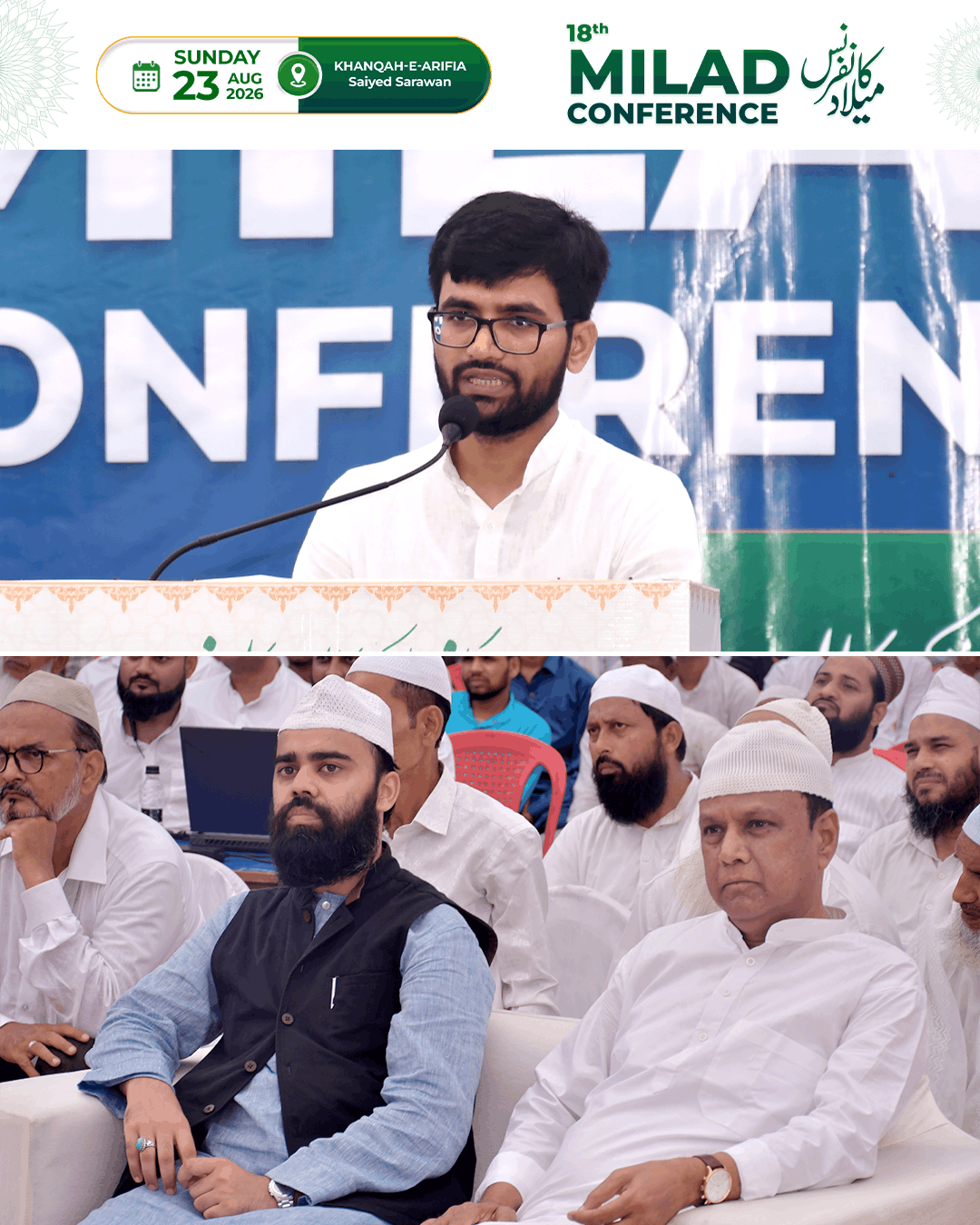
Saiyed Sarawan, Kaushambi: The 18th Annual Milad Conference was held at Khanqah-e-Arifia, Saiyed Sarawan, under the auspices of the Shah Safi Memorial Trust and the patronage of Hazrat Arif Billah Sheikh Abu Saeed Shah Ehsanullah Muhammadi Safawi. The conference was attended by scholars, intellectuals, government officials, lawyers, social figures, media representatives and people from different faiths.
The central message of the conference was that true devotion to the Holy Prophet Muhammad ﷺ does not consist merely in expressing devotion, but also calls for a practical commitment to serving humanity and upholding humility, justice, human dignity, self-reliance, brotherhood and standing against oppression.
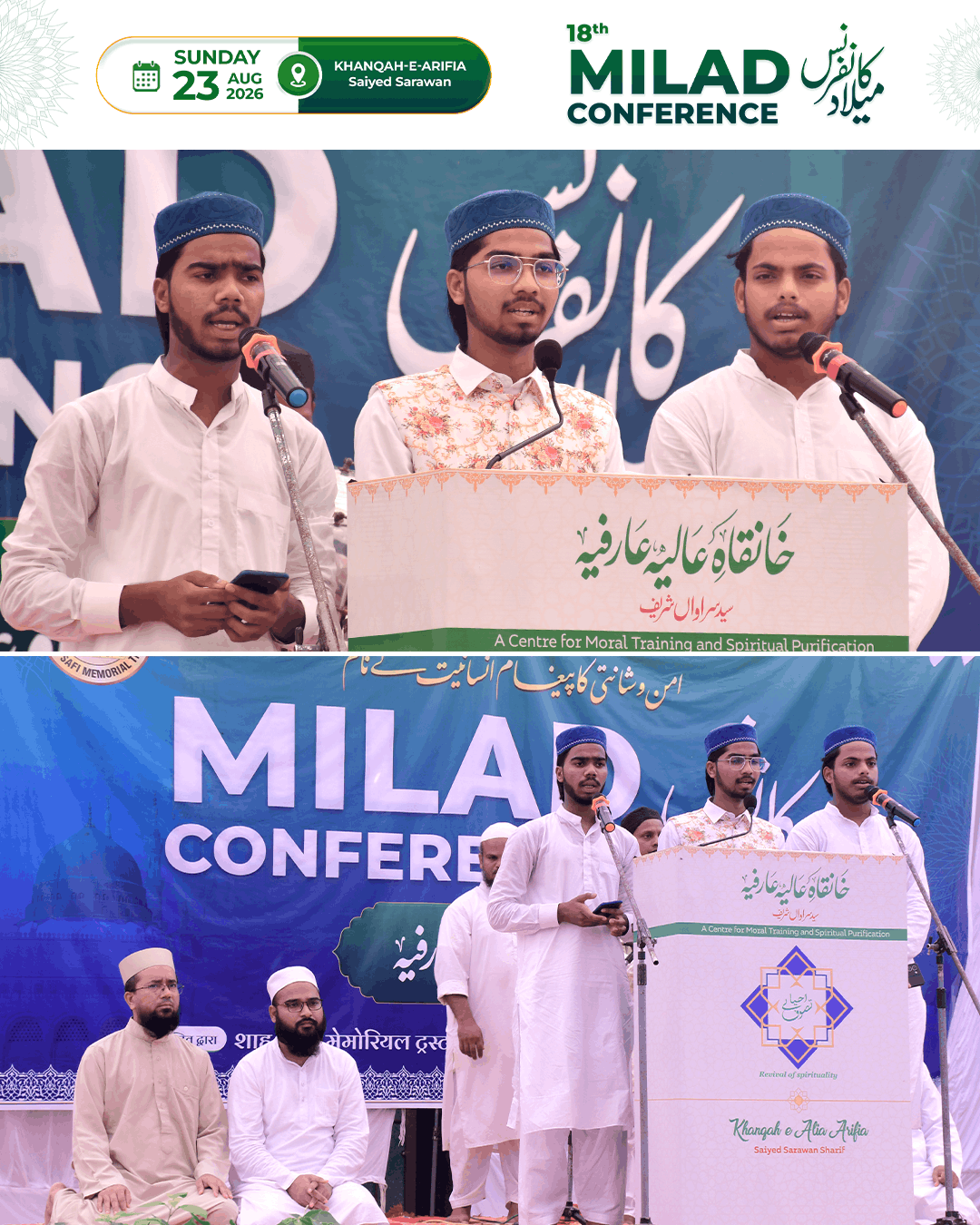
The programme was conducted by noted journalist Mohammad Ahmad of Watan Samachar, Delhi. It began with the recitation of the Holy Qur’an by Qari Sarfaraz Saeedi, while the Saeedi Brothers and Maulana Sajid Saeedi Misbahi recited Hamd and Naat.
Addressing the gathering, Maulana Mohammad Zaki Saeedi, a teacher at Jamia Arifia, spoke on the relationship between knowledge and character. He said that possessing extensive knowledge and information is certainly an achievement, but the true greatness of a person is reflected in his moral character.
He said that Whatever the Holy Prophet ﷺ taught others, he first practised himself and set a living example. Referring to several incidents from the Seerah of the Prophet ﷺ, he highlighted his compassion, kindness, gentle speech and noble character. He said that the words and conduct of a believer should give others hope, peace and a sense of security rather than causing hatred or hurt.

Allama Syed Sadiq Hussaini expressed concern over the present global unrest, loss of human life and violations of human rights. He said that in such circumstances, the need to return to the Seerah was greater than ever before.
Referring to the prisoners of the Battle of Badr, he said that instead of punishing the educated prisoners, the Holy Prophet ﷺ offered them freedom in return for teaching illiterate Muslims. He said that sharing knowledge and skills with others and enabling people to become educated and skilled could form an effective foundation for peace and collective progress in society.
The Saeedi Brothers later presented devotional and spiritual compositions, creating a deeply spiritual atmosphere at the gathering.
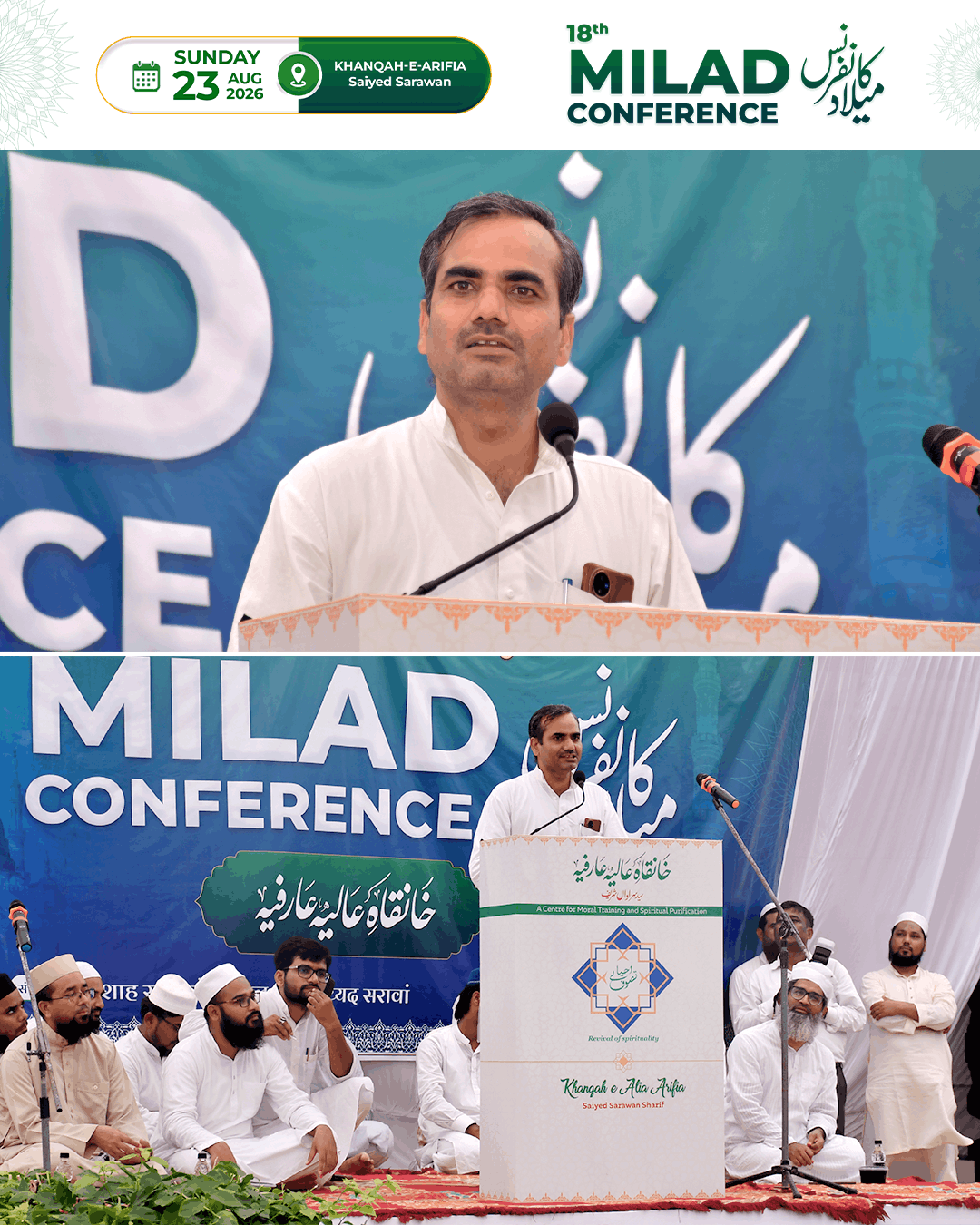
Senior Advocate K. K. Roy of the Allahabad High Court described India as a land of interfaith harmony and shared culture. Citing historical examples, he highlighted the country’s tradition of religious coexistence. He referred to instances in Allahabad where Mughal rulers had provided land and resources for the Kumbh Mela and religious institutions.
He said that India’s real strength lies in its tradition of people living together in harmony. He also stressed that Islam teaches peace while also giving people the courage to stand against oppression. Merely speaking about principles, he said, is not enough; they must be put into practice in daily life.
Delivering the keynote address, Khatib-us-Sufiya Allama Arif Iqbal Misbahi of Madhubani, Bihar, said in the light of the teachings of the Holy Qur’an that the essence of Islam lies in establishing a strong relationship with the Creator and serving His creation, while maintaining humility in service.
Referring to the rights of parents, relatives, orphans, the poor, neighbours, travellers and those under one’s care, he said that true service does not mean providing only temporary help to a person in need. Rather, they should be enabled to stand on their own feet and eventually become capable of helping others.
He cited an incident from the life of the Holy Prophet ﷺ in which a needy person, instead of being given temporary financial assistance, was guided towards work and earning his own livelihood. He said that such dignified self-reliance was an important practical lesson from the Seerah of the Prophet ﷺ.
Referring to Hilf al-Fudul, he said that even before the declaration of his Prophethood, the Holy Prophet ﷺ had participated in a collective effort to support the oppressed and stand against injustice. He said that along with worship, social justice, support for the weak, access to employment and healthcare, the rights of neighbours and protection of human dignity form the foundation of a better society.

Maulana Hussain Saeed Safawi, CEO of Shahi Products, thanked the guests and participants of the conference. The Saeedi Brothers then presented the Naat, “Nabiyan Ke Sultan Muhammad, Aap Hain Aali Shan Muhammad.”
Advocate Rajvendra Singh of the Allahabad High Court described raising one’s voice against injustice as a human and moral responsibility. He said people should not remain silent in the face of oppression.
Referring to voices being raised against the loss of human lives in Gaza, he said that what was needed most was practical action rather than mere words.
The entire conference was organised and managed by the Shah Safi Memorial Trust, with Mr Sajid Saeedi Burhani, Manager of Jamia Arifia, playing a prominent role in the arrangements. The teachers and students of Jamia Arifia also actively contributed to the arrangements and various organisational duties under the supervision of Principal Allama Imran Habibi.
Among the prominent participants were Brigadier Syed Ahmad Ali, Allama Syed Sadiq Hussaini, Senior Advocate K. K. Roy, Advocate Rajvendra Singh, Mohammad Rizwan Qadri, Sunil Sahu, Balram Sahu, Manu Soni, Suresh Singh, Amarjeet Singh, Devendra Pandey, Parinder Narayan Shukla, Lala Maharaj, Dilip Keserwani, Chunnu Lal Vishwakarma, Dr Syeed Ahmad, Advocate Mohammad Husamuddin Khan, Maulana Imran Karari, Qari Aslam Gahore, Sheikh Mahboobullah Baqai Mahoba, Dr Irfan Najaf Aleemi and Dr Sultan pura Mufti, along with several other religious and social figures, legal professionals, government officials and media representatives.
Towards the end of the programme, the Saeedi Brothers recited Salat-o-Salam, “Ya Shafi al-Wara, Wajh-e-Kaun-o-Makan, Har Zaman Ho Salat-o-Salam Aap Par.”
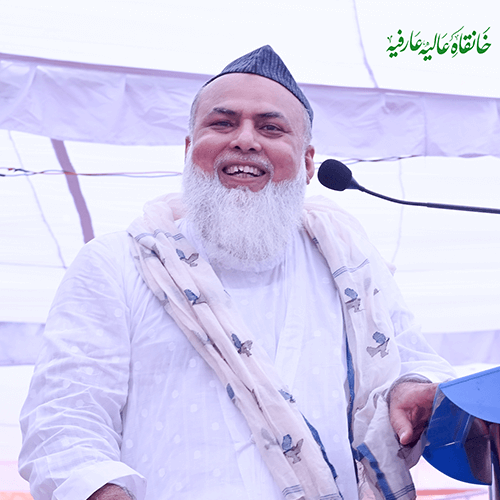
The programme concluded with a special prayer by Hazrat Arif Billah Sheikh Abu Saeed Shah Ehsanullah Muhammadi Safawi. Prayers were offered for peace, mutual love, brotherhood, human welfare and security throughout the country and society, following which sweets were distributed among the participants.


Comments 1
Aliya Siddiqui
Allahpak duniya ki tamam rahmat Miyahuzoor per nawazde bahut acha miladunnabi ka intezam tha mere Miyahuzoor ki tabiyat sahi rahe aur lambi Umar de inshahallah ameen aur meri ammi bhi bahut achi rahe sath me mere bahan bhai bhi sab log ko achi sehat se nawaze inshahallah Amin Apki beti Aliya
Leave your comment